Arbitration & Mediation

Explore articles in this category

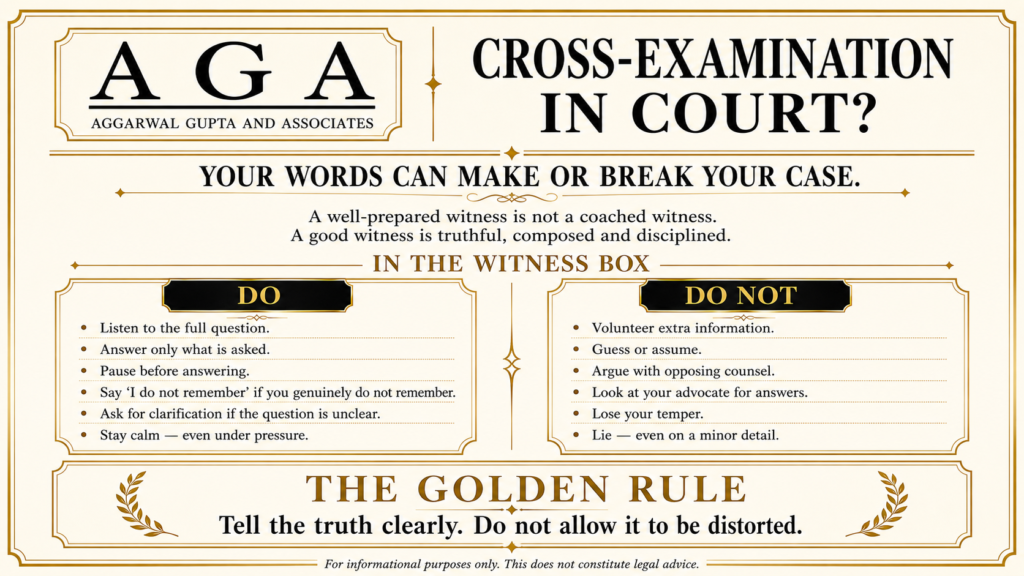
Preparation for Cross-Examination in Court: A Practical Guide for Witnesses

Preparation for Cross-Examination in Court Guidance Notes for Witnesses By: Anuj Gupta Advocate | Enrolment No. D/1556/2001 Aggarwal Gupta & Associates Cross-examination by an advocate is an art. At same time, before hand preparation of your client for cross-examination is equally important as they are not expert in legal field. What all do’s and dont’s

Preparation for Cross-Examination in Court: A Practical Guide for Witnesses Read More »
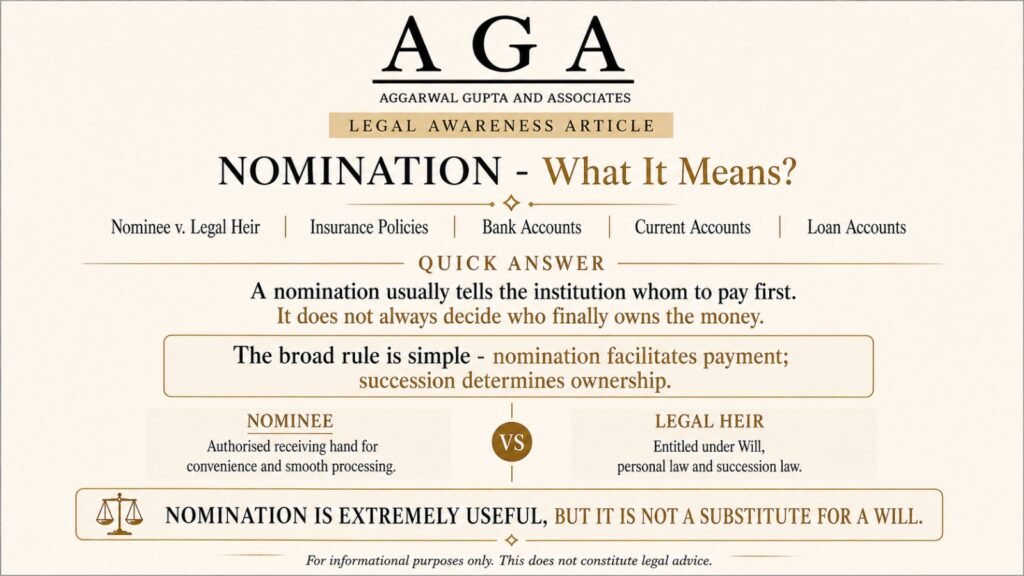
NOMINATION – What It Means?

Nominee v. Legal Heir | Insurance Policies | Bank Accounts | Current Accounts | Loan Accounts Quick answer: A nomination usually tells the institution whom to pay first. It does not always decide who finally owns the money. The broad rule is simple – nomination facilitates payment; succession determines ownership. The common confusion Many families

NOMINATION – What It Means? Read More »

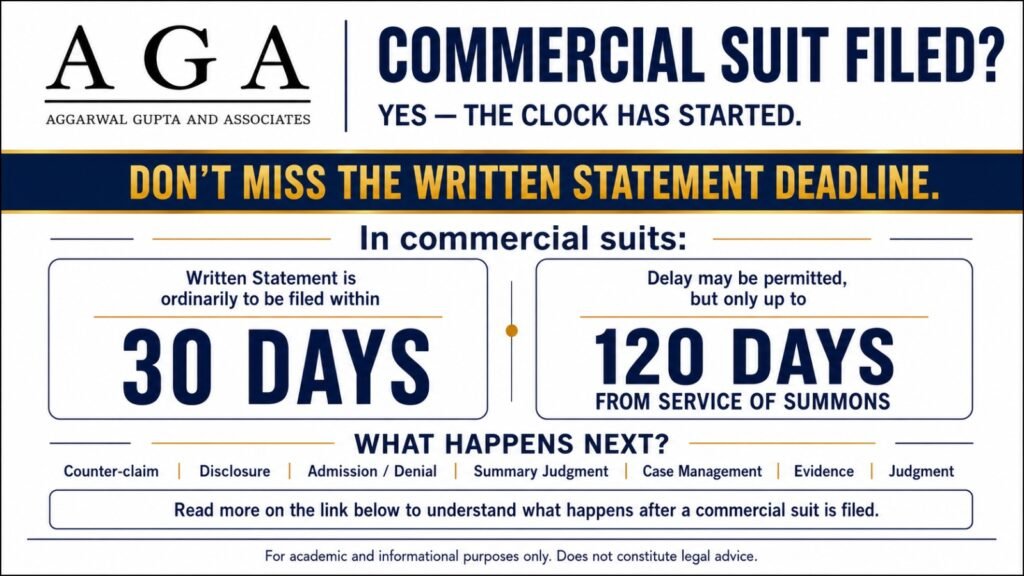
Post-Institution Procedure in Commercial Suits

Written Statement Timeline, Counter-claim, Admissions/Denials, Summary Judgment, Case Management & Evidence Overview In our earlier article “EXPLAINING THE INSTITUTION OF COMMERCIAL SUITS UNDER THE COMMERCIAL COURTS ACT, 2015: LEGISLATIVE INTENT, PROCEDURE AND JUDICIAL MANDATES” , we covered the institutional pathway of a commercial suit—forum selection, specified value, Section 12A pre-institution mediation (PIM), Statement of Truth,

Post-Institution Procedure in Commercial Suits Read More »

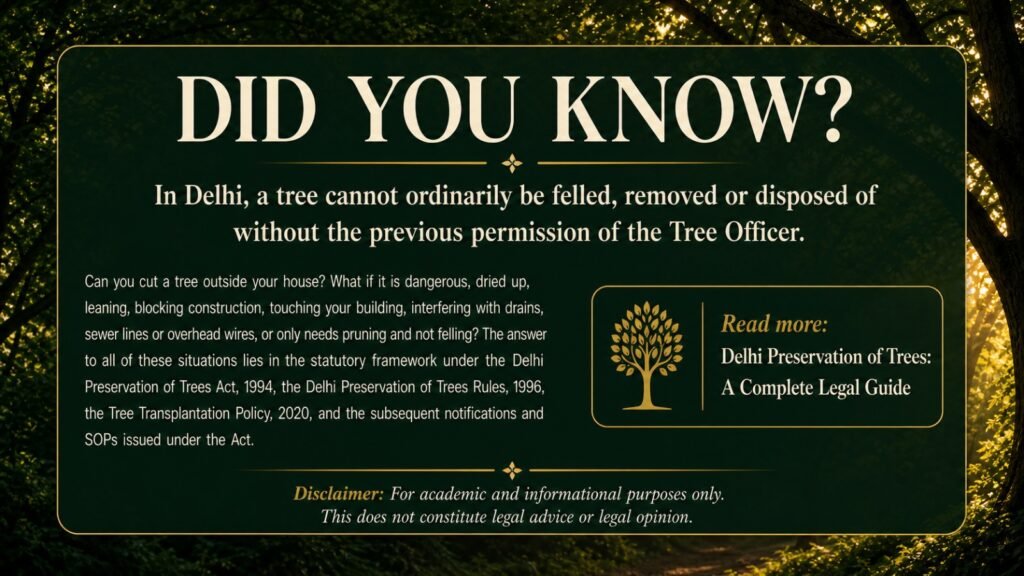
Delhi Preservation of Trees: A Complete Legal Guide

The statutory regime governing trees in the National Capital Territory of Delhi is principally contained in the Delhi Preservation of Trees Act, 1994 (“DPTA”), read with the Delhi Preservation of Trees Rules, 1996, the Tree Transplantation Policy, 2020, the Directions to Tree Officers under Section 33 of the DPTA regarding Section 8, the Standard Operating

Delhi Preservation of Trees: A Complete Legal Guide Read More »

Section 15 CPC: The Suit Must Start in the Proper Court

Section 15 of the Code of Civil Procedure 1908 lays down a basic rule of civil litigation: “Every suit shall be instituted in the court of the lowest grade competent to try it”. The underlying object of Section 15 is not to overburden higher courts with suits which can be tried by courts of lower

Section 15 CPC: The Suit Must Start in the Proper Court Read More »

Gujarat High Court: Family Courts Can Look at Electronic Evidence Even Without Section 65B Certificate

In an important decision, the Gujarat High Court has clarified that Family Courts can consider electronic evidence even if a Section 65B certificate is not filed, provided the material helps the Court properly decide the dispute. This ruling came in Nileshbhai Jonbhai Mekwan v. Pritiben D/o Arneshtbhai Christian, decided on 11 February 2026 by a

Gujarat High Court: Family Courts Can Look at Electronic Evidence Even Without Section 65B Certificate Read More »

Resignation, Notice Period and the New 2-Day Wage Rule

Resignation, Notice Period and the New 2-Day Wage Rule General information for website publication. This note is intended for awareness purposes only and does not constitute legal advice. Recent reporting has created the impression that every employee who resigns is automatically entitled to a complete “full and final settlement” within two days. The legal position

Resignation, Notice Period and the New 2-Day Wage Rule Read More »

Ad-Interim Maintenance vs Interim Maintenance vs Final Maintenance

Ad-Interim Maintenance vs Interim Maintenance vs Final Maintenance Introduction Maintenance law ensures that a person legally entitled to support is not left without financial assistance merely because court proceedings are pending. The expressions ad-interim maintenance, interim maintenance, and final maintenance are connected, but they operate at different stages and serve different purposes. Ad-Interim Maintenance Ad-interim

Ad-Interim Maintenance vs Interim Maintenance vs Final Maintenance Read More »

Explaining The Institution Of Commercial Suits Under The Commercial Courts Act, 2015: Legislative Intent, Procedure And Judicial Mandates

The Commercial Courts Act, 2015 (“the Act”) was enacted to address a systemic deficit in the adjudication of commercial disputes – namely, delay, unpredictability, and the consequent erosion of contract enforcement. The Act, read with the Code of Civil Procedure, 1908 as amended for commercial disputes (“CPC–Commercial Regime”), erects a specialised procedural architecture: (i) a

Explaining The Institution Of Commercial Suits Under The Commercial Courts Act, 2015: Legislative Intent, Procedure And Judicial Mandates Read More »

Get Your Legal Advisor Today